
Alberta's history is one of opportunity, resilience, and remarkable growth. Long before European settlement, the region was home to diverse Indigenous peoples, including the Blackfoot Confederacy (Siksika, Kainai, and Piikani), Cree, Dene, Stoney Nakoda, Tsuu T'ina, Saulteaux, Métis, and many other First Nations whose histories continue to shape the province today. During the late nineteenth and early twentieth centuries, Alberta welcomed ranchers, homesteaders, railway workers, and immigrants from across Europe and around the world, transforming the Prairies into thriving agricultural and urban communities.
Whether your ancestors established a homestead near Red Deer, ranches in southern Alberta, farms around Edmonton, businesses in Calgary, or communities throughout the Peace Country, Alberta offers a fascinating collection of historical records documenting the province's rapid development.
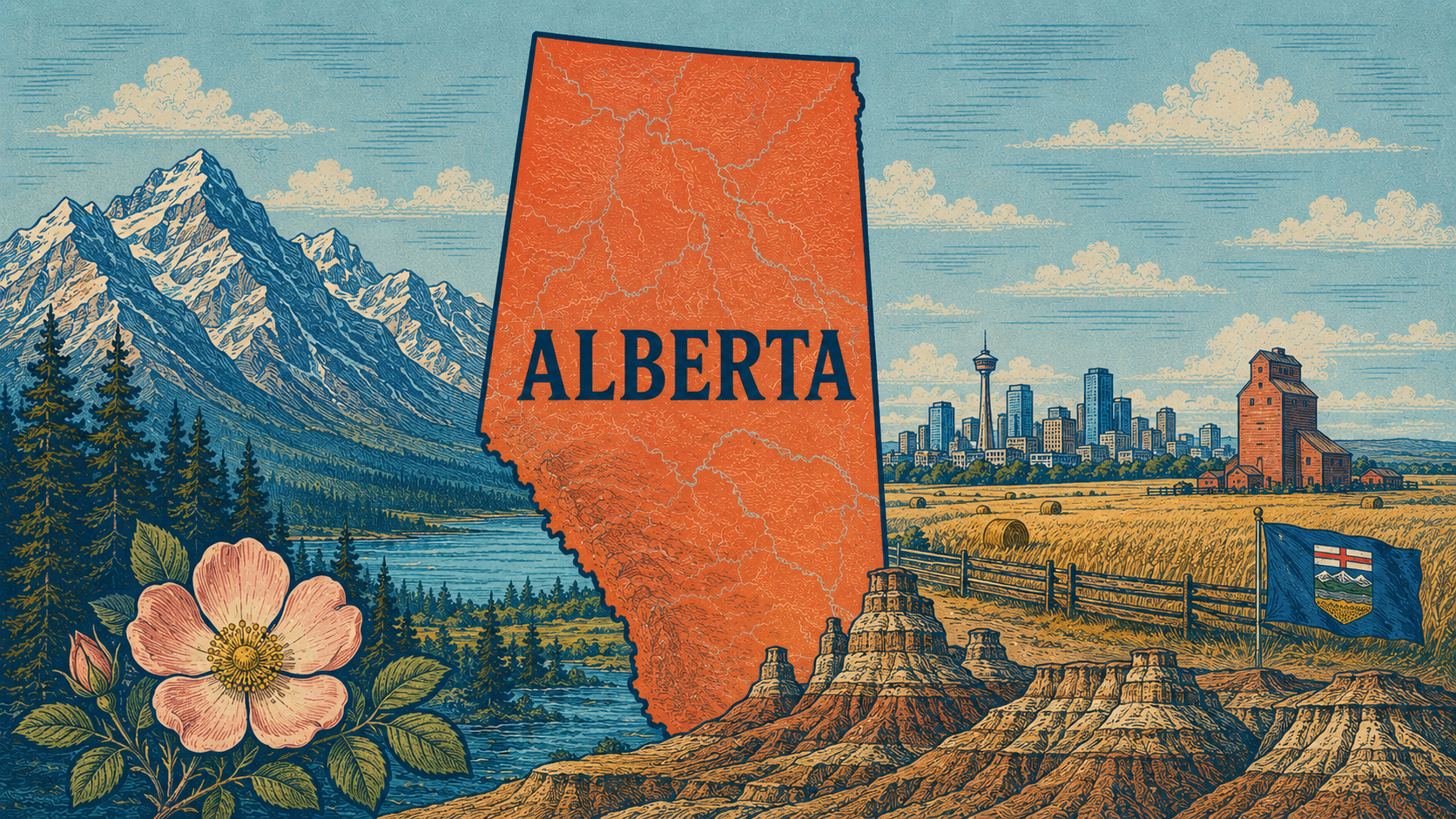
At Trace, our professional genealogists specialize in Alberta genealogy research. We combine historical expertise with access to provincial, national, and international archives to uncover the people, places, and events that shaped your family's story.
Whether you're beginning your family tree, tracing immigrant ancestors, researching Métis or First Nations family connections, overcoming a research brick wall, or gathering documentation for Canadian citizenship by descent, Trace is ready to help.
Although Alberta is one of Canada's youngest provinces, its records tell the stories of Indigenous communities, fur traders, ranching families, homesteaders, and immigrants who helped build the modern West.
Professional Alberta genealogy research can help you discover:
Every historical document helps reconstruct your family's journey across the Canadian Prairies.
Many Alberta homestead files contain far more than a legal land description. They may include proof of residency, improvements made to the property, personal correspondence, witness statements, and details about an ancestor's daily life, making them some of the richest genealogical records available for Prairie families.
Unlike provinces with centuries of colonial settlement, Alberta experienced its most dramatic population growth during the late nineteenth and early twentieth centuries. The arrival of the railway, the Dominion Lands Act, and government immigration programs attracted families from across Canada, the United States, Britain, and continental Europe.
Our genealogists regularly solve challenges involving:
Understanding these migration patterns is essential for accurately tracing Alberta ancestors.
One of Alberta's most valuable genealogical resources is the collection of Dominion Lands homestead records. Beginning in the late nineteenth century, the Canadian government encouraged settlement across the Prairies by offering homesteads to individuals willing to develop the land.
Applicants were required to meet specific conditions before receiving legal ownership, creating detailed government files that often contain far more than land information.
Homestead records may include:
For genealogists, these files often provide a vivid picture of an ancestor's life while establishing connections between immigration, settlement, and later generations.
Trace's genealogists regularly combine homestead records with census returns, church registers, land titles, newspapers, and probate files to reconstruct Prairie family histories.
Alberta became one of Canada's greatest destinations for immigrants during the late nineteenth and early twentieth centuries. Government immigration campaigns promoted the province throughout Europe and North America, encouraging families to establish farms and communities across the Prairies.
Significant immigrant communities included:
Many communities retained their language, churches, schools, and cultural traditions for generations. As a result, Alberta genealogy often involves records created in multiple languages and maintained by diverse religious denominations.
Trace frequently connects Alberta records with earlier records from Europe, the United States, and eastern Canada to reconstruct complete migration stories.
Alberta offers an outstanding collection of records documenting the province's rapid settlement.
Among Alberta's most valuable genealogical resources, homestead files often document:
Birth, marriage, and death registrations help document Alberta families across multiple generations and frequently identify parents, birthplaces, occupations, and residences.
Our genealogists regularly examine:
These records often extend family histories beyond government registration.
Canadian census records document:
Land records help establish where families settled, transferred property, and built communities across Alberta.
Trace researches records relating to:
Military files frequently include next of kin, addresses, occupations, and service history.
Alberta has one of Canada's strongest Métis histories. Métis communities developed throughout the Prairies through generations of relationships between First Nations women and European fur traders, creating a distinct culture, language, and identity.
Following the Red River Resistance and later settlement across western Canada, many Métis families established communities throughout Alberta. Today, the province is home to several Métis Settlements, unique within Canada.
Genealogical research involving Métis ancestry may include parish registers, scrip records, census returns, land files, mission records, community histories, and government collections. Because Métis families often moved throughout the Prairie Provinces, successful research frequently spans Manitoba, Saskatchewan, and Alberta.
Trace approaches Métis genealogy with respect for the community's unique history and carefully evaluates historical evidence to reconstruct documented family connections.
Long before Alberta became a province in 1905, the region was home to numerous Indigenous nations whose histories continue to shape the province today. These include the Blackfoot Confederacy (Siksika, Kainai, and Piikani), Cree, Dene, Stoney Nakoda, Tsuu T'ina, Saulteaux, Beaver (Dane-zaa), Métis, and many other First Nations.
Research involving First Nations ancestry often follows different pathways than traditional immigrant genealogy. Depending on the family and historical period, records may include treaty documents, mission registers, church records, government collections, residential school records where appropriate, community archives, oral histories, and other specialized historical sources. Some records may only be available through Indigenous communities or may have restricted access.
Trace approaches Indigenous genealogy with respect for each community's history, recognizing that successful research often combines documentary evidence with community knowledge and culturally appropriate research practices.
Although Alberta officially became a province in 1905, its history stretches back thousands of years through Indigenous communities and centuries through the fur trade. During the nineteenth century, Hudson's Bay Company trading posts, missionary activity, and the arrival of the North-West Mounted Police established the foundations for later settlement.
The completion of the Canadian Pacific Railway and passage of the Dominion Lands Act encouraged unprecedented immigration. Ranchers developed the southern grasslands while farmers established communities throughout central and northern Alberta. Later discoveries of oil and natural gas further transformed cities such as Calgary, Edmonton, and Fort McMurray into major economic centers.
These rapid changes created rich documentary records that allow genealogists to follow families from their arrival in Alberta through subsequent generations.
Our research process is designed to provide clarity, transparency, and dependable results.
We begin by reviewing your family history, existing research, photographs, and goals to determine the best starting point.
Your genealogist develops a customized strategy focused on the historical records most likely to answer your questions.
Our team researches provincial archives, Library and Archives Canada, church repositories, homestead files, land titles, newspapers, military records, and specialized historical collections.
Every discovery is carefully analyzed and supported by historical evidence.
You'll receive a professionally prepared report and research calendar documenting every discovery, including source citations, historical context, copies of key records when available, and recommendations for future research.
Alberta genealogy often requires connecting records across multiple provinces and countries. Our genealogists understand the settlement history, immigration patterns, and record collections that make Prairie genealogy unique.
When you work with Trace, you benefit from:
Our goal is to preserve your family's history through carefully documented, professional research.
Our services are ideal for:
Whether your ancestors lived in Calgary, Edmonton, Red Deer, Lethbridge, Medicine Hat, Grande Prairie, Fort McMurray, or a rural farming community, Trace can help uncover their story.
You may also be interested in:
Alberta's history is one of determination and new beginnings. From the First Nations and Métis communities who have lived on the Prairies for thousands of years to the ranchers, homesteaders, railway workers, and immigrant families who helped build the province, every generation has contributed to Alberta's remarkable story.
Whether your ancestors claimed a homestead, worked on the railway, settled in an immigrant farming colony, established a ranch, or built new lives in Alberta's growing cities, Trace can help uncover the records that preserve their legacy.
Our professional genealogists combine historical expertise with meticulous research methods to deliver discoveries that can be shared with your family for generations to come.
Ready to discover your Alberta ancestors?
Whether you're tracing Prairie homesteaders, documenting ancestry for Canadian citizenship by descent, researching Métis or First Nations family connections, uncovering immigrant origins, or breaking through a long-standing research brick wall, Trace is ready to help.
Book a consultation today and let Trace's professional genealogists uncover your Alberta family history.