
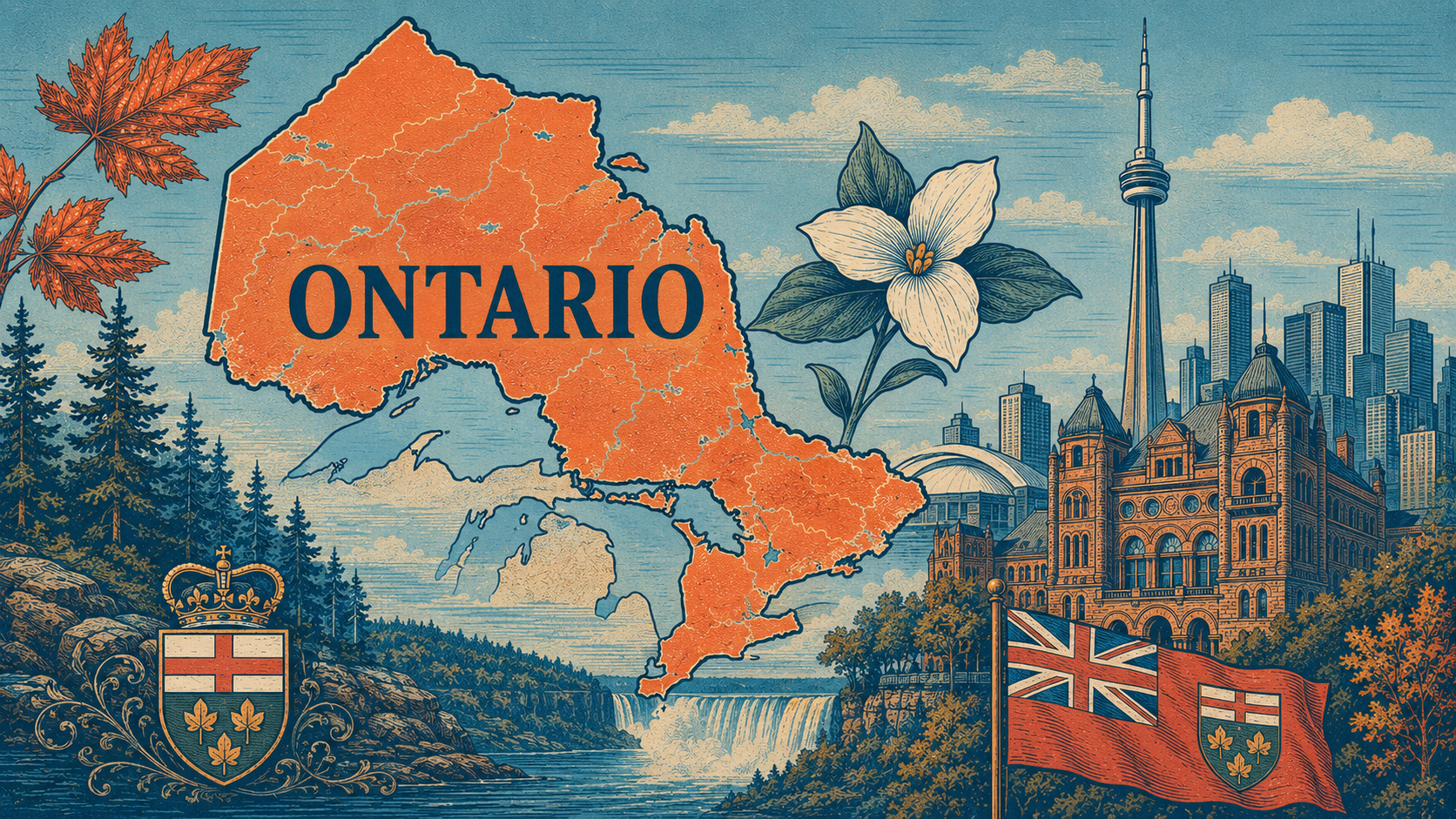
Ontario has long been the gateway to Canada. Home to thriving Indigenous nations for thousands of years, the province later became a destination for French explorers, United Empire Loyalists, British settlers, and millions of immigrants seeking new opportunities. Today, Ontario's rich historical records document generations of families who helped shape Canada's political, economic, and cultural development.
Whether your ancestors settled along the St. Lawrence River after the American Revolution, farmed the fertile lands of Upper Canada, built communities throughout Southwestern Ontario, worked in the factories of Hamilton and Windsor, or established businesses in Toronto or Ottawa, Ontario offers one of Canada's richest collections of genealogical resources.
At Trace, our professional genealogists specialize in Ontario genealogy research. We combine historical expertise with access to provincial, national, and international archives to uncover the people, places, and stories that shaped your family's history.
Whether you're building your family tree, overcoming a research brick wall, documenting your heritage, or gathering evidence to support Canadian citizenship by descent, Trace is ready to help.
Ontario's history mirrors the development of modern Canada. Over the past two centuries, the province welcomed settlers from England, Scotland, Ireland, Germany, the Netherlands, Italy, Poland, Ukraine, and many other countries. Their stories are preserved in thousands of historical collections that document where they came from, how they settled, and the lives they built.
Professional Ontario genealogy research can help you discover:
Every document adds another chapter to your family's story, helping transform names and dates into a rich understanding of the generations that came before you.
Many descendants of Ontario's earliest European settlers have United Empire Loyalist ancestry without realizing it. Loyalist records often contain remarkable details about military service, family relationships, previous homes in the American colonies, and the land grants that established some of Ontario's oldest communities.
Ontario genealogy spans more than two centuries of migration, settlement, and growth. Unlike some provinces whose records center around one religious denomination or one settlement period, Ontario's history encompasses diverse communities, changing county boundaries, and multiple waves of immigration.
Successful research often requires understanding:
Many Ontario families moved several times during the nineteenth century, first arriving in eastern Ontario before continuing westward as new lands opened for settlement. Understanding these migration patterns often reveals where additional family records may be found.
One of the most important chapters in Ontario's history began at the conclusion of the American Revolution. Between 1783 and the early nineteenth century, tens of thousands of men, women, and children who remained loyal to the British Crown left the newly established United States and resettled in British North America. These settlers became known as the United Empire Loyalists, and many established communities throughout what would later become Ontario.
The British government encouraged Loyalist settlement by providing land grants, supplies, and financial assistance to help these families establish new lives. As a result, Loyalists became some of the earliest permanent European settlers in Upper Canada, founding farms, churches, schools, towns, and businesses throughout regions including the Bay of Quinte, the Niagara Peninsula, the St. Lawrence Valley, Eastern Ontario, and Southwestern Ontario. Their descendants played an important role in the political, economic, and social development of the province.
For genealogists, Loyalist ancestry presents exceptional research opportunities. Many Loyalist families generated an extensive paper trail through Upper Canada Land Petitions, military service records, compensation claims, muster rolls, township papers, Crown land grants, and correspondence with colonial officials. These records frequently identify spouses, children, parents, previous residences in the Thirteen Colonies, military service during the American Revolution, and relationships among extended family members. In many cases, they provide a documented bridge connecting an ancestor's life in colonial America with their new life in Upper Canada.
Not every early Ontario settler was a Loyalist, however. Many families arrived later from England, Scotland, Ireland, Germany, and other European countries throughout the nineteenth century. Family tradition alone is rarely enough to establish Loyalist ancestry. Professional research and careful evaluation of historical records are often required to determine whether a family qualifies as descendants of a United Empire Loyalist.
Trace's professional genealogists regularly research Loyalist families, helping clients verify Loyalist ancestry, identify original communities in the American colonies, locate military and land records, and reconstruct family histories that span both sides of the U.S.-Canada border.
Ontario offers one of Canada's richest collections of historical records. Trace researchers regularly work with a wide variety of sources to reconstruct family histories.
Upper Canada Land Petitions are among Ontario's most valuable genealogical resources. Thousands of early settlers petitioned the government for land, often providing detailed information about themselves and their families.
These petitions frequently include:
For Loyalist descendants, these records often provide the first documented evidence connecting families to Upper Canada.
Following approval of land petitions, settlers often received Crown Land Grants.
These records can reveal:
Together with township papers and assessment rolls, land records provide an excellent picture of how communities developed.
Birth, marriage, and death registrations document Ontario families across multiple generations.
These records commonly identify:
They often serve as the foundation for twentieth-century family history research.
Before civil registration became widespread, churches recorded many important life events.
Our genealogists regularly research:
Church registers frequently extend family lines well before government registration began.
Canadian census records provide valuable snapshots of Ontario families throughout history.
Depending on the census year, these records may include:
They often provide the framework for reconstructing entire households over multiple generations.
Probate files frequently identify:
These records can solve difficult family relationships that may not appear elsewhere.
Ontario families have participated in many significant military conflicts.
Trace regularly researches records relating to:
Military files often include service history, addresses, occupations, next of kin, medical information, and pension applications.
Between 1869 and the 1930s, more than 100,000 British Home Children were sent to Canada, with Ontario receiving the largest number.
These records can reveal:
For many descendants, Home Children records provide the first documented connection back to ancestors in England, Scotland, Ireland, or Wales.
Ontario's history is one of continuous movement, settlement, and growth. Long before European exploration, the region was home to thriving Indigenous nations that developed sophisticated trade networks, governance systems, and communities across the Great Lakes and inland waterways. These communities established many of the transportation routes that later influenced European settlement.
French explorers and fur traders arrived during the seventeenth century, establishing trading posts and strengthening alliances with Indigenous nations. While French settlement in what is now Ontario remained relatively limited compared to Quebec, their presence left a lasting influence on communities throughout eastern and northern Ontario.
Following the American Revolution, Ontario experienced one of its most significant periods of growth as thousands of United Empire Loyalists established new communities across Upper Canada. Their arrival laid the foundation for many of the province's earliest towns and agricultural settlements.
Throughout the nineteenth century, Ontario continued to expand rapidly. Large numbers of immigrants from England, Scotland, and Ireland arrived seeking farmland and economic opportunity. Later waves of immigration brought families from Germany, the Netherlands, Italy, Poland, Ukraine, and many other countries, contributing to Ontario's cultural diversity. As railways expanded and industries grew, cities such as Toronto, Hamilton, Ottawa, London, Windsor, and Sudbury became centers of commerce, manufacturing, and government.
These migration patterns created extensive historical records that document not only where families lived, but also how they moved within Ontario and across North America. Understanding these settlement trends often provides valuable clues for breaking through genealogical brick walls.
Ontario has been home to Indigenous peoples for thousands of years, and their histories remain an essential part of the province's story. Today, the province includes the traditional territories of many Indigenous communities, including the Anishinaabe (Ojibwe, Odawa, and Potawatomi), Haudenosaunee (Six Nations), Algonquin (Anishinaabe), Cree, Delaware (Lenape), Mississaugas, and Métis communities.
Genealogical research involving Indigenous ancestry often follows different research pathways than traditional immigrant genealogy. Depending on the family and historical period, valuable information may be found in treaty records, mission registers, church records, government documents, community archives, oral histories, and other specialized historical collections. Access to some records may be limited or guided by community protocols.
Trace approaches Indigenous genealogy with respect for each community's history and an understanding that successful research often requires combining historical documentation with local knowledge and culturally appropriate research practices.
Ontario's location along the Great Lakes made it one of North America's most important transportation and immigration corridors. While many settlers arrived directly from Europe, others first established themselves in the United States before moving north into Upper Canada. Likewise, thousands of Ontario families later crossed into states such as Michigan, Ohio, Minnesota, and New York in search of employment, farmland, or industrial opportunities.
These cross-border movements created rich documentary trails that may include passenger lists, border-crossing records, naturalization files, census records, land transactions, and military service records in both Canada and the United States.
Ontario also became home to successive waves of newcomers throughout the nineteenth and twentieth centuries. Irish families fleeing the Great Famine, Scottish agricultural communities, English tradespeople, German and Dutch farmers, Italian laborers, Polish immigrants, Ukrainian settlers, and many others established vibrant communities throughout the province. Understanding these migration patterns helps identify where records were created and where additional generations may be found.
Trace regularly conducts cross-border research that connects Canadian and American records, helping families reconstruct migration stories that span multiple countries and generations.
Our research process is designed to provide clarity, transparency, and dependable results from beginning to end.
Every project begins with a conversation about your family history, research goals, and the information you already have. Family stories, photographs, previous research, and historical documents all help establish the best starting point for your project.
Your genealogist develops a customized research strategy tailored specifically to your family's history. We identify the record collections most likely to answer your questions and outline a clear research plan before work begins.
Our team conducts detailed research using Ontario archives, Library and Archives Canada, county repositories, church collections, land records, military files, historical newspapers, and additional archival resources throughout Canada and internationally.
Every discovery is carefully analyzed, correlated with other evidence, and supported by historical documentation.
At the conclusion of your project, you'll receive a professionally prepared report explaining our findings in clear language. Reports include source citations, historical context, copies of key records when available, and recommendations for future research.
Ontario genealogy often spans multiple jurisdictions, changing county boundaries, and more than two centuries of historical records. Successfully reconstructing a family history requires more than searching online databases. It requires historical knowledge, careful evidence analysis, and familiarity with the province's diverse record collections.
When you work with Trace, you benefit from:
Our goal is to produce research that is accurate, well documented, and meaningful for you and future generations of your family.
Our services are ideal for:
Whether your ancestors lived in Toronto, Ottawa, Kingston, Hamilton, London, Windsor, Sudbury, Thunder Bay, Peterborough, Guelph, or a rural township, Trace can help uncover their story.
You may also be interested in:
Ontario's story is one of resilience, opportunity, and continual growth. From the First Nations and Métis communities who have called this region home for thousands of years to the Loyalists who established Upper Canada and the immigrants who helped build modern Ontario, every generation has contributed to the province's rich history.
Whether your ancestors arrived after the American Revolution, crossed the Atlantic from Ireland or Scotland, came as British Home Children, immigrated from continental Europe, or moved across the U.S.-Canada border in search of new opportunities, their lives are documented in records waiting to be discovered.
Trace's professional genealogists combine historical expertise with meticulous research methods to uncover those records, connect generations, and preserve your family's story with accuracy and care.
Ready to discover your Ontario ancestors?
Whether you're tracing a United Empire Loyalist family, researching British Home Children, documenting ancestry for Canadian citizenship by descent, uncovering documented First Nations or Métis family connections, or breaking through a long-standing research brick wall, Trace is ready to help.
Book a consultation today and let Trace's professional genealogists uncover your Ontario family history.
Trace’s professional genealogists can also help uncover your Acadian, First Nations, French Canadian and Métis ancestry through careful, respectful, and evidence-based research. By examining parish registers, census records, land petitions, notarial documents, treaty and scrip records, church collections, community archives, and other historical sources, we work to identify family connections and place your ancestors within their historical and cultural context. Because Indigenous and Métis genealogy may involve complex records, changing terminology, and community-specific protocols, Trace approaches each project with sensitivity, transparency, and a commitment to documenting conclusions accurately without overstating the evidence.