
Prince Edward Island may be Canada's smallest province, but it holds an extraordinary place in the country's history and genealogy. Long before European settlement, the island was home to the Mi'kmaq, who have lived throughout Epekwitk, as the island is known in the Mi'kmaq language, for thousands of years. French settlers later established Acadian communities, followed by British colonists, Scottish Highlanders, Irish immigrants, United Empire Loyalists, and families from across Europe who helped shape the island's unique identity.
Whether your ancestors lived in Charlottetown, Summerside, Georgetown, Souris, Montague, or a small rural parish, Prince Edward Island offers remarkably rich historical records that preserve generations of family history.
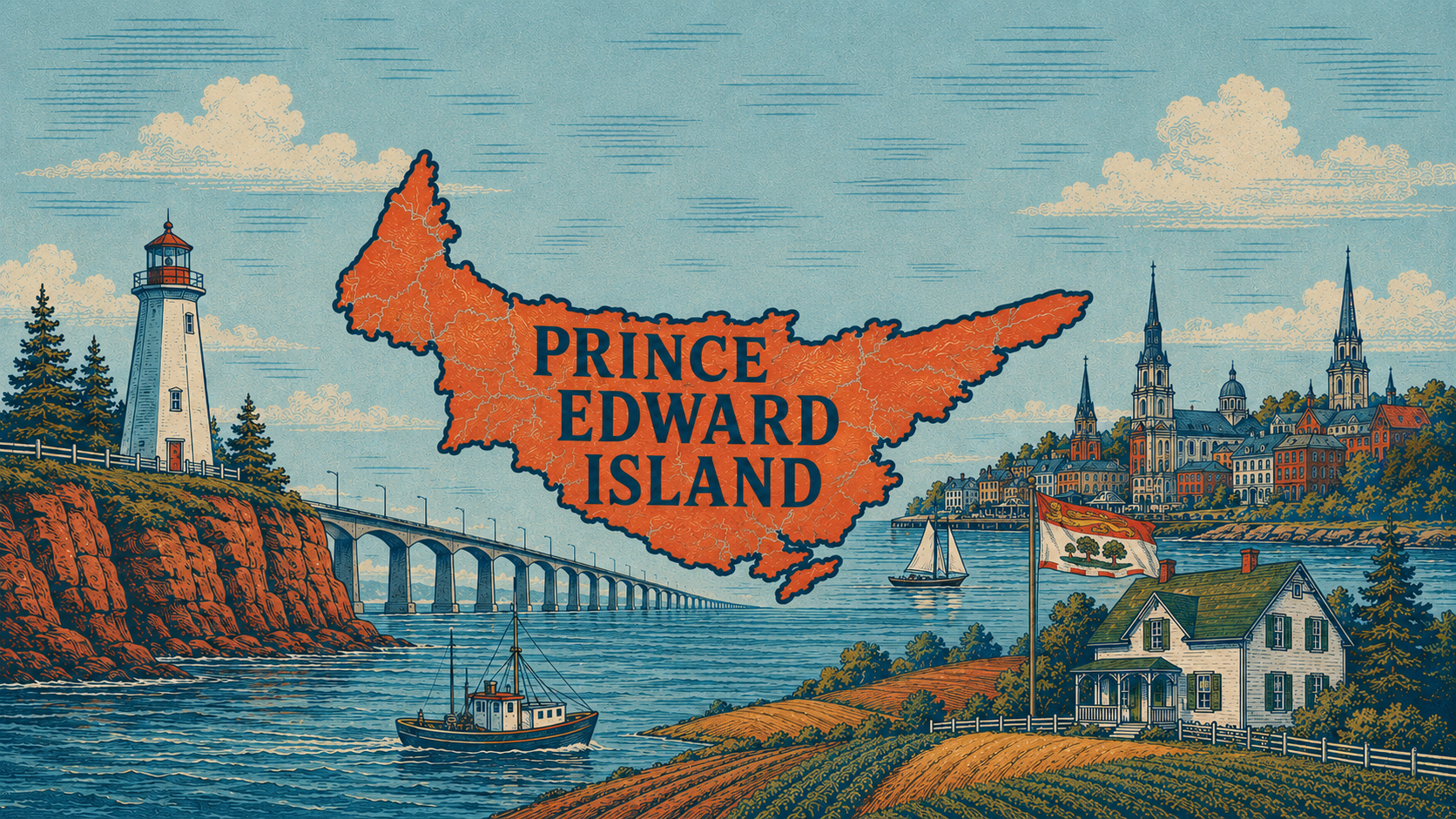
At Trace, our professional genealogists specialize in Prince Edward Island genealogy research. We combine historical expertise with access to provincial, national, and international archives to uncover the people, places, and stories that shaped your family's past.
Whether you're beginning your family tree, researching Scottish or Acadian ancestry, overcoming a research brick wall, or gathering documentation for Canadian citizenship by descent, Trace is ready to help.
Prince Edward Island's compact geography and long-established communities make it one of Canada's most rewarding provinces for genealogy research. Many families remained in the same communities for generations, creating exceptionally detailed documentary trails.
Professional Prince Edward Island genealogy research can help you discover:
Every historical record provides another piece of your family's story.
Prince Edward Island's famous 1767 Land Lottery divided nearly the entire island into sixty-seven townships that were granted to landowners in Great Britain. Although many of these absentee landlords never lived on the island, the records created by this system remain invaluable for tracing early settlers, tenants, and later property owners.
Prince Edward Island's history differs from every other Canadian province. Its distinctive land ownership system, relatively stable rural communities, and strong Scottish, Irish, and Acadian heritage create exceptional opportunities for family history research.
Our genealogists regularly solve challenges involving:
Understanding the island's unique settlement patterns is essential for reconstructing family histories across generations.
One of Prince Edward Island's most distinctive historical events was the 1767 Land Lottery, conducted shortly after Britain gained control of the island following the Seven Years' War. Rather than encouraging individual settlers to claim land, the British government divided nearly the entire island into sixty-seven townships and awarded them by lottery to military officers, politicians, merchants, and other influential individuals in Great Britain.
Many of these landowners never settled on the island themselves, instead leasing land to tenant farmers. As a result, generations of Prince Edward Island families lived under a landlord-tenant system that shaped the province's economy and society well into the nineteenth century.
For genealogists, the records created through this system are invaluable. Township maps, rent rolls, leases, land petitions, estate records, and later property transactions often identify individuals, family relationships, occupations, and places of residence. These collections help reconstruct the lives of early settlers even when other records are limited.
Trace's genealogists regularly use Land Lottery records alongside parish registers, probate files, and census records to document families who established roots on Prince Edward Island.
Prince Edward Island became one of the most important destinations for Scottish immigrants in Atlantic Canada. Beginning in the late eighteenth century and continuing throughout the nineteenth century, thousands of Highland Scots crossed the Atlantic seeking farmland and new opportunities.
Many settled in communities such as Belfast, Orwell, New London, Georgetown, and eastern Kings County, where Scottish traditions, Presbyterian churches, and Gaelic language remained strong for generations.
Researching Scottish ancestors often involves connecting Prince Edward Island church records, land records, probate files, and census records with parish registers and civil records in Scotland. Trace's genealogists regularly help families identify ancestral communities in the Highlands and Islands and reconstruct migration stories across the Atlantic.
Irish families have also played an important role in Prince Edward Island's history. Significant immigration occurred during the early and mid-nineteenth century, particularly during and after the Great Irish Famine (1845-1852).
Many Irish immigrants established farming communities throughout Queens and Kings Counties, while others settled in Charlottetown and surrounding communities. Roman Catholic and Protestant parish registers, cemetery records, land documents, newspapers, and probate files frequently provide valuable information for tracing Irish ancestors.
Many Prince Edward Island families later migrated to mainland Canada or New England, creating important research connections between the island and the northeastern United States.
Prince Edward Island offers an exceptional collection of historical records for family historians.
Church records remain the foundation of Prince Edward Island genealogy.
Our researchers regularly examine:
These records often document baptisms, marriages, burials, witnesses, occupations, and family relationships.
Prince Edward Island's land records include:
These collections provide remarkable insight into family settlement and community development.
Probate files frequently identify:
Canadian census records provide valuable information including:
Birth, marriage, and death registrations complement church records and help document more recent generations of Prince Edward Island families.
Trace researches records relating to:
Military files often include service history, residences, occupations, and next of kin.
Before British rule, Prince Edward Island, then known as Île Saint-Jean, was home to thriving Acadian communities. During the Expulsion of the Acadians, many island residents were deported, while others eventually returned or established new communities elsewhere in Atlantic Canada.
Today, Acadian descendants continue to form an important part of Prince Edward Island's cultural heritage. Church registers, French colonial records, land records, and parish documents frequently help reconnect families separated during the Expulsion and trace their ancestry back to the earliest Acadian settlements.
Trace regularly assists clients researching Acadian families whose histories span Prince Edward Island, Nova Scotia, New Brunswick, Quebec, Louisiana, and France.
Long before European settlement, Prince Edward Island formed part of Mi'kma'ki, the traditional homeland of the Mi'kmaq people. The Mi'kmaq have lived throughout the island for thousands of years, maintaining vibrant communities, trade networks, and cultural traditions that continue today.
Genealogical research involving Mi'kmaq ancestry often requires different research approaches than traditional immigrant genealogy. Depending on the family and historical period, records may include mission registers, church records, treaty documents, government collections, community archives, oral histories, and other specialized historical sources. Access to some records may be governed by community protocols.
Trace approaches Indigenous genealogy with respect for Mi'kmaq history and an understanding of the unique historical context surrounding these records.
Prince Edward Island's history reflects centuries of maritime settlement and agriculture. French settlers established Acadian communities before British control transformed the island's political landscape. Scottish Highlanders, Irish immigrants, Loyalists, and English settlers followed, creating prosperous farming communities that remained remarkably stable for generations.
Unlike many rapidly growing regions of North America, Prince Edward Island experienced relatively little urbanization during the nineteenth century. As a result, many families remained in the same townships for decades, creating extensive documentary records that greatly benefit genealogical research.
Our research process is designed to provide clarity, transparency, and dependable results.
We begin by reviewing your family history, existing documentation, photographs, and research goals.
Your genealogist develops a customized strategy focused on the historical records most likely to answer your questions.
Our team researches provincial archives, church repositories, land records, probate files, census collections, newspapers, military records, and additional historical resources throughout Prince Edward Island and beyond.
Every discovery is carefully evaluated and supported by historical evidence.
You'll receive a professionally prepared report documenting every discovery, complete with source citations, historical context, copies of key records when available, and recommendations for future research.
Prince Edward Island genealogy requires expertise in land records, church registers, Scottish and Irish immigration, Acadian history, and maritime settlement patterns.
When you work with Trace, you benefit from:
Our goal is to preserve your family's history through carefully documented, professional research.
Our services are ideal for:
Whether your ancestors lived in Charlottetown, Summerside, Georgetown, Souris, Montague, Tignish, or a rural township, Trace can help uncover their story.
You may also be interested in:
Prince Edward Island's story is one of enduring communities, maritime heritage, and generations of families who built lives on Canada's smallest province. From the Mi'kmaq people whose connection to Epekwitk stretches back thousands of years to Acadian settlers, Scottish Highland immigrants, Irish farming families, Loyalists, and later newcomers, each generation has added to the island's remarkable history.
Whether your ancestors cultivated farmland, fished the surrounding waters, established businesses in Charlottetown, or later migrated elsewhere in Canada or the United States, Trace can help uncover the records that preserve their legacy.
Our professional genealogists combine historical expertise with meticulous research methods to deliver discoveries that can be shared with your family for generations to come.
Ready to discover your Prince Edward Island ancestors?
Whether you're tracing Scottish or Irish roots, researching Acadian ancestry, documenting a family line for Canadian citizenship by descent, uncovering documented Mi'kmaq family connections, or breaking through a long-standing research brick wall, Trace is ready to help.
Schedule a consultation today and let Trace's professional genealogists uncover your Prince Edward Island family history.